Two islands in one, practically speaking: the dry, resort-heavy Kohala and Kona coasts on the west side, and the wet, residential Hilo and Puna districts on the east. Managers rarely cover both well.
8markets on this island
5verified companies covering them
KOAthe airport your guests land at
Photo by Josh Withers on Pexels · free-licence stock
The local reality
The Kohala Coast resorts and the Puna subdivisions are four hours apart by road and run on different economics. Hire a manager whose own service-area page names your side of the island rather than one that lists the whole island generically.
Full-service, US-wide with Hawaiʻi market pages Fee published
The only company on this page that prints what it charges before a phone call: 20% full-service, 10% on the partner tier, plus a one-time onboarding retainer. For a Hawaiʻi owner comparing five quotes that all say “it depends”, a published number is the thing that makes the comparison possible at all. One Fine BnB's management.
Published fee20% full-service, 10% on the partner tier, plus a one-time onboarding retainer
The long-standing Kohala Coast incumbent; its office is inside Mauna Lani Terrace rather than in a town centre.Read from its own website:
Publishes vacation-rental management, property maintenance and preventative care, guest services, a linen and towel programme, and reservations management.
Distributes to VRBO, Airbnb, Booking.com and Expedia.
Describes managing “the largest collection of private homes and condominiums on the Kohala Coast”.
The only company in this entire dataset that prints a number before you call. Its service list is long-term tenancy management, so read the 10% against that scope — not against a nightly-turnover operation.Read from its own website:
Publishes its management fee outright: 10% of collected rents.
States no other fees and cancellation at any time with no cancellation fee.
Takes vacation-rental and commercial management on a selective basis.
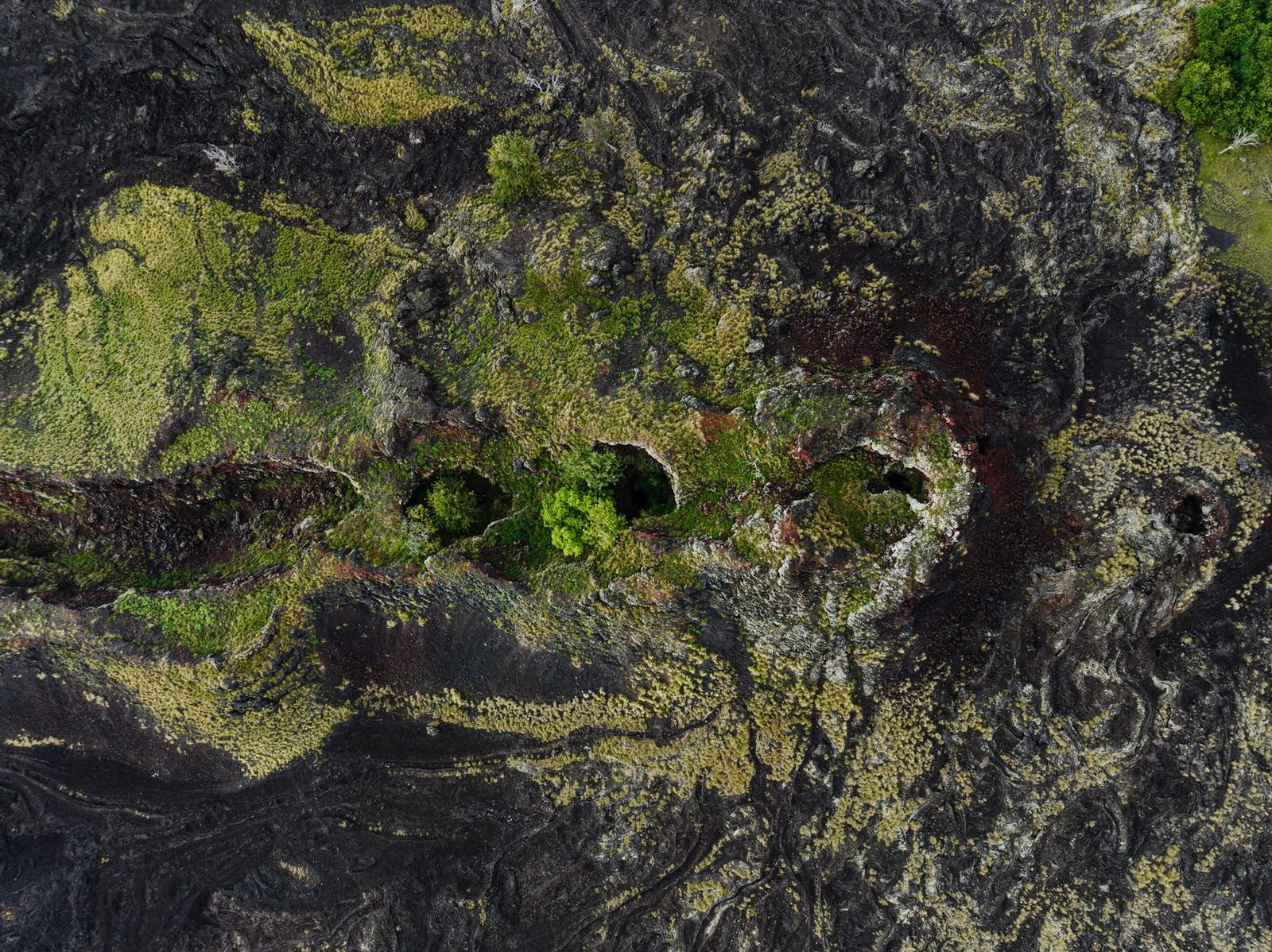
Hawaiʻi Island — Vegetation reclaiming an old lava flow on the Kona side of Hawaiʻi Island, seen from above · Photo by Josh Withers on Pexels
How the Hawaiʻi Island markets differ from each other
Owners tend to think in islands and managers tend to work in markets, which is why an island-level
shortlist is only ever a starting point. On Hawaiʻi Island the practical differences between markets show
up in four places: the kind of property you own, how the year moves, how far help has to travel, and who
turns up at the door.
Kailua-Kona: A real town with real supply: trades, stores and staff all live here, and the airport is twenty minutes north.
Keauhou: Ten minutes south of Kailua-Kona, so it shares the town's supply base while feeling like a separate market.
Waikoloa: The resort has services on site; the village is a fifteen-minute climb away from them.
Waimea (Kamuela): Forty minutes from the Kohala resorts and the trade base that serves them, which cuts both ways: cheaper to live in, slower to service.
Hilo: The east side's supply base, so trades and stores are close — but the rain is constant and it drives the maintenance calendar more than occupancy does.
Puna & Hawaiian Paradise Park: The hardest operating environment in this dataset: unpaved access, catchment systems that need servicing, and long distances between properties.
Volcano: A small village with limited local supply; most trades come from Hilo, about forty minutes away.
Read the two or three that match your property before you call anyone. The question a manager cannot
fake is a local one, and every market page here ends with the local question worth asking.
What to have ready before you start calling
Five things turn a vague conversation into a real quote: your address and tax map key, the building or
association name if there is one, the stay lengths your parcel actually allows, whether you intend to use
the property yourself and how often, and what you currently pay for cleaning. Managers who are given
those five facts quote properly. Managers who are not will quote a range, and a range is not something you
can compare against anything.
The first of those five is the one owners most often skip. Confirm it with the county rather than with
a manager — the stay-length question sets out how to ask so
that you get a usable answer about your specific parcel rather than a general one about the island.
Where the money question sits
Across Hawaiʻi Island, almost every company quotes per property on a call rather than publishing a
rate. That is a market convention rather than a warning sign, but it does mean the only advance
comparison available to you is against a company that does publish. Ours does — 20% full-service, 10% on the partner tier, plus a one-time onboarding retainer —
which is why it sits first on this page, labelled as ours: Airbnb management fees.
Hawaiʻi Island questions
How many managers on Hawaiʻi Island publish a fee?
Of the companies we could verify here, 1 publishes a rate on its own website and the rest ask you to call. That is not a judgement about their service — it is a fact about how the market prices itself.
What should I have ready before the first call?
Your address and TMK, the building or association name if there is one, the stay lengths you are willing to run, whether you plan owner stays, and what you currently pay for cleaning. With those five things a manager can quote properly instead of vaguely.
We keep one local setting to remember that you closed this notice. No advertising or tracking cookies.